Showing posts with label vegetarian. Show all posts

Sunday, January 7, 2024

Hoppin' John

 Every year, I google vegetarian hoppin' john recipes and every year I'm disappoint. Either it doesn't look like what I want, so I don't make it, or I try it and the flavor profile is too similar to the collards, or it's bland. This year's is the best I remember trying. Flavorful and paired nicely with the four pepper collards without duplicating the same flavor profile. I might not stick with it exactly, but it's a good base to start from.

Ingredients

  • ~1/3 lb dried black eyed peas
  • 1 onion
  • 1 stalk celery
  • ~1/2 a large poblano leftover from collards
  • 1 orange bell pepper
  • a few sprigs thyme
  • 2 bay leaves
  • salt 
  • olive oil
  • ~2/3 can of fire roasted tomatoes
  • rice (I used brown jasmine because it's what I had on hand)

1. Soak beans beforehand. (I know, I know! I basically never do, but I did this time.)

2. Start rice cooker with rice.

3. Dice and saute the onion and celery in a tablespoon or so of olive oil in a dutch oven or similar pot.

4. While sauteing, dice the peppers. When the onion and celery have softened, add the peppers and saute a bit more.

5. When all the vegetables are soft, add the thyme, bay leaves, and salt. Stir a couple of times then add the black eyed peas (drained) and enough water to cover them comfortably.

6. Bring to a boil and then simmer until the peas are all but done.

7. Stir in the tomatoes and simmer a few minutes more.

8. Take off the heat. Stir peas mixture, including some of the broth, into the rice. May have some peas left over. That's fine. It makes a good soup, too.


Sunday, December 24, 2023

A New Tradition for Christmas Eve Soup

Sometime in the '90's, we established the Christmas Eve tradition of crockpot clam chowder, cornbread, salad, and cookies for dinner. It worked as something that was easy to prep during the day, finish after (or between) the Christmas Eve church service(s). Outside of out usual diet, so it felt special.

John's mom also makes clam chowder on Christmas Eve, at least some of the time, so it seemed like a reasonable idea to keep that tradition going as we establish the next generation of traditions.

Except I didn't really want to make a meat focused tradition? Even seafood! While no one in our household is vegetarian at the moment, it is not a stretch to imagine hosting friends or family who are. (Even though right now, our local friends are pescatarians. Though we do have some fish allergies in the social circle...)

Tonight we tested a French Onion Soup, and I think it might just work. If we could manage it on a day with morning and evening services, with a toddler who is off his normal sleep schedule, and a quick visit from a friend between church and dinner, it gives me hope that it will be possible to continue in years where we're running around to other Christmas Eve commitments and visits. 

Like the clam chowder, it's a dish that feels out of our usual routine. Despite being a straightforward recipe, I think it's likely to stay that way; it's not the filling meal of a soup that we usually turn to. If I order French Onion Soup at a restaurant, it's likely to be a starter or a side. Tonight's salad was heavy on chickpeas, and incorporating that level of protein elsewhere in the meal makes sense. It's a lighter meal that leaves plenty of space for chocolate cakes or cookies or other desserts. Which seems fitting for the occasion.

Tonight's recipe does not need to be the definitive tradition! But writing it down now gives us a place to keep notes on what has been done.

Vegetarian French Onion Soup for the Slow Cooker

Adapted mostly from Southern Living, Food 52, and Simply Recipes.

  • 2 to 3 pounds of Sweet Onions, thinly sliced
  • 1.5 teaspoons sugar
  • 1.5 teaspoons salt
  • 0.5 teaspoons black pepper
  • 0.25 cup melted butter
  • 1 bay leaf
  • 1 quart vegetable scrap stock 
  • Bit of white wine
  • 1 Tablespoon molasses
  • 1 smashed garlic clove
  • 10 shakes of dried thyme
  • Stale sourdough for gluten eaters. Toasted gluten free bread for those with allergies.
  • Gruyere cheese

Last night, I sliced the onions and put them in the crock with the sugar, salt, and black pepper. Left them in the refrigerator overnight (it was strongly scented when I opened it this morning). This morning I pulled them out, put the insert in the electric pot itself, and stirred in the melted butter, tossed in the bay leaf. Turned the whole contraption on high and went about the day. The onions released their juices and changed color over the course of the day. I stirred them around lunch time and again before we left for the afternoon Mass.*

When we got home in the evening, I microwaved the stock.** While the stock was warming, I drizzled in a bit of white wine (we don't have sherry vinegar, and do have a bottle in the fridge that gets cooked with). Once that was incorporated (and had a bit of time to cook off the alcohol), I added a spoonful of molasses and the smashed garlic clove. When the stock was warmed, I poured it into the pot and added in 10 shakes of the dried thyme.

Ideally this would all reach a simmer and the flavors would meld over the course of, checks the reference recipes, a half hour or so. Realistically, I preheated the oven, grated the cheese, and pulled together a salad and then rushed to get food to the very hungry toddler.

Ladled soup into ramekins on a cookie tray. Topped with the appropriate breads (different colors of ramekin for the different types of bread). Added a generous amount of cheese to each. Set the broiler to low and slid the whole thing into the oven. A few minutes later, pulled it out, and served.


* One possible change to consider is doing the onions on low overnight instead of high during the day. I'm curious if that would get them to a deeper caramelization than they reached today. Could also let the lid be ajar a bit more frequently during the day.

** Two notes on the stock. First, most recipes call for more than what I used, but it was what we had on hand. Second, if the week before has an inkling of cooking with dried mushrooms, I would totally upgrade to mushroom stock.


Friday, July 14, 2023

Cabbage Slaw

This summer, I'm trying to do a better job at hosting friends over to grill in the garden. It takes a bit of planning to figure out which friends to invite together and reserve the grills if it's going to be a large enough group. And of course, there is the menu.

For summertime, my go-to grilling main is brats and similar sausages. They're straightforward and usually precooked all the way through, so I don't fret about not cooking them enough in the middle. (I'm getting better at grilling but still learning!) Veggies from the CSA or other seasonal produce go on the grill, too. Many of my vegetarian (and some omnivorous) friends like Beyond Meat, so I'll pick up Beyond Brats, too.

I like slaw on my brats, and it makes a good side for others. Earlier this summer, I searched through my cookbooks looking for the type of slaw I was remembering from my childhood. Not the mayonnaise one. The other, vinegary one. Struck out in More-with-Less. Didn't find it in Jane Brody. Eventually pulled out the Whitmire Memorial Library cookbook, and voila, there were multiple recipes that fit the bill. This recipe is modified from Twenty-Four Hour Slaw by Peggy Bullard and Cabbage Slaw by Pam Alexander.

Cabbage Slaw

Grate the following (a food processor is your friend here):

  • Half a small cabbage
  • One carrot (or two if small)
  • One small white onion

Heat together until the sugar dissolves:

  • 1/3 c apple cider vinegar
  • 1 Tbsp water
  • 1/3 c sugar
  • 1/2 tsp kosher salt
  • mustard seeds
  • celery seeds

In a bowl, mix the grated ingredients to distribute. Pour the sauce mixture over the cabbage. Mix. Cool in the refrigerator for a few hours or overnight.

 Note: if you shred more than needed, then you've got a base for okonomiyaki ready to go.

Friday, June 25, 2021

Dill Dip

Our garden plot came with dill volunteers. We tried to protect them as we rebuilt our bed, but only one survived.

That said, one dill plant is still a decent amount of dill. Maybe not for all our pickling dreams. But we're pulling it early because it was next to the tomatoes and we'd rather not have the tomatoes growth stunted. But there was no question what the first thing to make with it was.

Dill dip is a classic summer dish for John.  4th of July? Dill dip. Birthday potluck picnic in the park? Dill dip. It's the condiment for hanging out with friends, drinking iced beverage of choice, eating chips. (The recipe says it's great with raw veggies. Which is true. I still think it's better with chips.)

The recipe is in the binder of recipes from family and friends that his parents gave him around the time he graduated from college.

Dill Dip

1 cup sour cream
1 cup mayonnaise
2 Tablespoons dill seed or dill weed
2 teaspoons seasoned salt
3 Tablespoons minced onions
3 Tablespoons parsley
 
Mix all ingredients and refrigerate. Let sit at least one day to allow flavor to set in. Excellent with all raw vegetables.

Friday, December 25, 2020

Baked Oatmeal

 I never liked grits.

For a Girl Raised In The South it feels like sacrilege. And yet, for 30 years, it was my truth. 

So even though I now order shrimp and grits at restaurants and make grits bowls with roasted veggies often enough that I used up the entire bag a houseguest gave us, it still feels like a primary* part of my identity is not liking grits.

 Christmas smells like cheese grits. Which I would dutifully try. Eating my grit and then going back to coffee cake. (At least until my last healthy holiday at home, when I actually liked them. And then ate a serving. And so John doesn't know that I don't like grits.)

We talked about making cheese grits for this Covidtine Christmas, but we used up our fancy houseguest bag. So switching to the baked oatmeal that John's mom makes felt reasonable. It even used up the can of pears that neither of us remembers buying. Acquisition from a previous roommate? Perhaps. Luxury anyway? Yes.

Baked Oatmeal

1.5 cups rolled oats (4.5 ounces)
1.5 cups thinly sliced peaches (canned peaches in juice may be used; or pears/blueberries. Could add nuts)
1/4 cups sugar
1 egg
2 teaspoons vanilla extract
1/4 teaspoon almond extract
3 cups milk

Preheat oven to 350º.

Grease 8 inch square baking pan. (Or whatever casserole/dutch oven you want to use.)

Combine oats, fruit, and sugar. 

In another bowl combine egg, vanilla, almond extract, and milk. Whisk together

Add liquids to oat mixture. Mix well. 

Pour into baking dish and bake uncovered for 50 minutes.

*Primary as in original. Not primary as in most important.

Wednesday, August 26, 2020

Eggplant Kottu Roti

 Kottu is a Sri Lankan street dish made with godamba roti stir fried with curry and eggs. I discovered it through Kottu House, a now closed restaurant[1] on the LES, which my coworkers and I frequented when our coworking space was around the corner. Even after we moved offices to another neighborhood, a couple of us would periodically venture back to get our favorites. My go to was the Garden Kottu: an eggplant, chiles, and tomato sauce curry.

In the spring, I googled for recipes but didn't find quite what I was looking for, and some of the ones that appeared more authentic and reasonable had ingredients I didn't have on hand: pandan leaves, Sri Lankan curry powder, curry leaves, godamba roti. Normally, I'd be up for the adventure of tracking them all down. This is New York City, after all. But with the quarantine, we were limiting grocery shopping trips, and I wasn't going to venture into a store unless I was stocking up.

A couple of recipes mentioned Indian paratha as a substitute for roti. It's flaky like Sri Lankan roti. I grabbed a pack of frozen paratha from Trader Joe's and stuck it in the freezer. Last week, I bought a giant eggplant from the farmer's market and decided it was finally time to try to make kottu. I ended up combining four recipes, using some substitutions that they suggested (e.g. garam masala as the curry powder). This is clearly not an authentic recipe, yet the taste was a reasonable approximation of what I remembered. It was milder than the ones at Kottu House (the mild there was approximately the same spiciness as medium at many Thai restaurants). Next time I'd add another hot pepper or more curry powder or both. I'll continue to experiment with it.

While I made this with the Garden Kottu in mind, it was a good way to use up a variety of CSA veggies that were lingering in the fridge. The set of veggies isn't a precise prescriptions. Feel free to mix it up. You can even do a coconut milk based curry if you'd like.

[1] Given my last post, it seems like a trend of quarantine is me attempting to replicate favorite foods from defunct NYC restaurants.

 Ingredients

  • Fennel seeds
  • Green coriander (my cilantro went to seed, so I channeled Samin Nosrat)
  • 2 leeks, chopped
  • 2 scallions, chopped
  • a bit of red onion
  • 2 garlic cloves
  • powdered ginger since I was out of fresh
  • garam masala
  • 2 jalapenos deseeded and diced (could have done 3 for this quantity veggies)
  • 1 green pepper deseeded and diced
  • 1 turnip julienned
  • 3ish cups eggplant cubed
  • some thinly sliced cabbage (my pan was full, so I didn't use much)
  • 1 tomato diced
  • the end of a tube of tomato paste
  •  2 Tbsp soy sauce
  • oil
  •  2.5 eggs (I did 2 eggs + an egg white as I had egg whites on hand), beaten
  • 2.5 paratha (sri lankan roti is traditional)

Method

  1. If using frozen paratha, cook in frying pan per directions on package. Meanwhile, chop veggies.
  2. Scramble eggs in a bit of oil. Set eggs and paratha to the side.
  3. Add a bit more oil to the pan. Toast fennel seeds. Add coriander. For less than a minute.
  4. Add the leeks and red onion, garlic, jalapenos, and bell pepper. Saute for a couple minutes.
  5. Add eggplant and saute until it's softened.
  6. Add garam masala, tomato, tomato paste, and soy sauce. Let the tomato get juicy and create a bit of sauce.
  7. Add turnip and cabbage. Cook until everything looks almost done.
  8. Slice the paratha (medium sized, shouldn't be too small). Add paratha and scrambled eggs to the pan with everything else. Toss and cook for a couple more minutes.
  9. Remove from heat and serve.

Thursday, June 9, 2016

Kale stem pesto

Last fall Julia taught me the trick of freezing your kale stems after you've torn the greens off. You can then later grind the kale stems into pesto. Use the whole leaf! The pesto is a bit icy if you use the kale stems straight from the freezer and serve it immediately, which can be nice for a cold bean salad in summer. Otherwise, plan to let the pesto warm up to room temp before serving.

Kale stem Walnut Pesto

a bunch worth of frozen kale stems
a handful of walnuts, toasted
1-2 garlic cloves
lemon juice
olive oil
parmesan (optional)

Throw everything into a food processor and blend. Add olive oil until you're happy with the consistency. Yesterday, I also added a few mint leaves to enliven the flavor a bit.

Tuesday, December 23, 2014

The next generation of holiday foods

"Nana, what's this?"

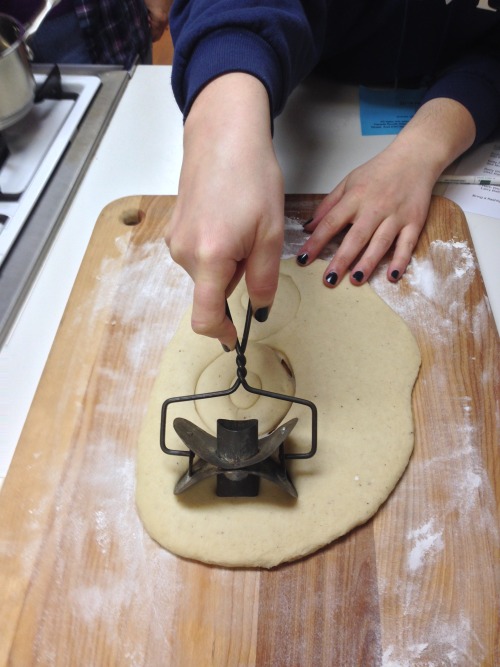
The funny looking tool must have hung on the wall next to the stove since before I was born. But I don't think I noticed it until I was in college.

Can we agree that it's funny looking?
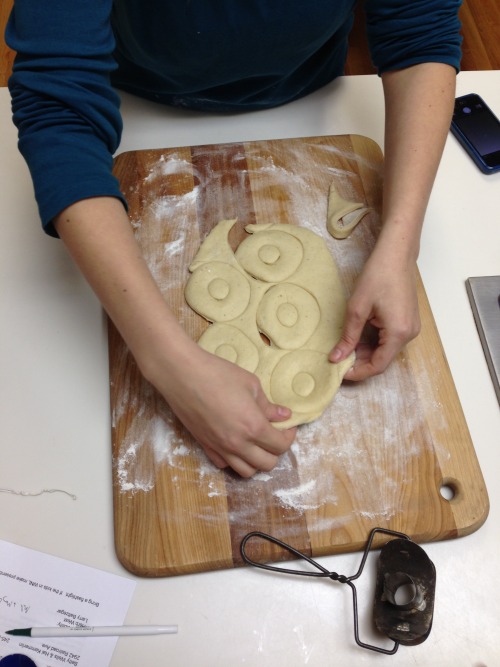
It's a dougnut cutter.

It is genius. I'm not sure how the fancy cooking gadgetry shops aren't selling these en masse throughout the holiday season. (I found one British site that has something, but it's missing the hole.)

1) It's a super-fun tool.
2) But it is mostly single use.
3) That would pair well with specialty sugars and glaze mixes and decorating supplies and whatever the hot doughnut cookbook is that season. (Actually, edit, is there a hot doughnut cookbook? Liz, we could propose a cookbook! That sounds like a great post-graduation career plan, right? ... Scopes out the competition. Top Pot published something three years ago. Maybe I'll stick with Plan A after all.)

Anyway.

The photos aren't date-stamped, but we think we made doughnuts with Nana the last Christmas in the house.

Elizabeth and I agreed then that we'd probably argue over who got the doughnut cutter when we divided the kitchen. Especially since I haven't had much success finding a similar cutter. Even in the internet age. Refer to my tangent.

This fall we sat on the apartment floor sorting. You take the cookie sheets. I get the silverware. Do either of us have space for the stand mixer? These baby pie plates are so cute!

We stared at each other when this came up. And then mom swooped in and claimed it.

Which obviously means that this was the Christmas for making doughnuts at mom's house. We pulled out the community cookbook, decided that 4.5 cups of flour was probably more than we needed and scaled down.


Doughnuts (makes not quite a dozen)
1/2 cup milk
4 teaspoons shortening
1/4 teaspoon salt
1 packet yeast
1 egg
1/4 cup sugar
dash nutmeg
1.5 - 2.5 cups flour, divided
Lots of oil for frying
Powdered sugar + spices for dusting

Scald the milk. Add the shortening and salt.
When it's cool enough, add the yeast and a cup of flour. Mix well. Then let the dough proof for 15 minutes "until full of bubbles."
Meanwhile mix the egg, sugar, and nutmeg. When the dough is ready, add the egg mixture and another half cup flour. Add flour by the half cup until it's kneadable. Then knead.
Let the dough rise for about an hour.
Turn out on a lightly floured board and roll. The recipe says 3/4 inch thick, but since we were making a third of the recipe we were closer to 1/4 inch thick.
(No, that wasn't the actual logic. Yes, that was the actual measurements.)
Cover with cloth and let rise "until top is springy to touch of finger."
Heat oil to 350-375ºF. (Our stove was finicky, so we kept turning the heat on and off to maintain the right temperature when we were frying. The candy thermometer was critical for this.)
Drop a doughnut into the hot fat with the raised side down. This lets the top side rise while the other side cooks. Fry for about a minute. Flip. Fry other side for a minute. Transfer to a paper towel to drain.
To dust with powdered sugar, put the sugar in a small paper bag. Put in 3 doughnuts at a time to shake, shake, shake.


~~~
Other cooking this holiday season:

Cheese straws and lady fingers a la Grandma Gerri

Chocolate Orange Peels. This year mostly following this post. Hot tip was to blanch the peels when they're in large sections and then cut into small strips before the candying process. Other experiment, when I ran out of chocolate chips, I tossed the rest in cocoa powder (this year was super sticky). Chocolate is better.

And I didn't cook them, but did get the recipe for Grandmom's Sausage Balls.


Tuesday, September 24, 2013

Last taste of summer

Summer doesn't feel the same in the city.

I mean, I suppose any year with time spent inside will never feel the same as it did when I spent 10 to 12 weeks at camp. Grown-up life doesn't have the intense friend-making experiences that I associate with summer.  There are fewer hikes and swims and thunderstorms. Less campfire food. (But more ice cream.) And living by myself, I don't eat nearly enough watermelon.

I've avoided eating watermelon in the city. It feels rude to spit seeds out on my fire escape. It takes too long to eat my way through it. But the farmer's market had some that were smaller (even if it takes up half a shelf in my fridge), and I decided I needed to keep summer going a little bit longer.

A week later I'm still working on it. When I was leafing through my Minnesota Monthly I saw a restaurant review that mentioned a watermelon and arugla salad with chevre and pickled radishes. And thus today's inspired lunch. Which was yummy enough to write-up in hopes that I'll remember it next time I buy too much watermelon.

Summertime Salad (for 1 Sarah-sized lunch)

1 inch-think slice of watermelon
3 radishes
2 inches of cucumber, thinly sliced
4 large leaves of lettuce
1 generous chunk of chevre
Apple cider vinegar
Sugar
Pepper
Olive oil
Honey

1) I don't have pickled radishes in the fridge. My first step  work on pickling the radishes--which I made up on the spot while cooking breakfast. What follows is what I did, not necessarily the best practice. Slice up some radishes. Put them in my smallest pot. Cover with apple cider vinegar. (Well, almost cover. I need to buy more vinegar.) Add a dash of sugar. Bring to simmer. Stirring occasionally.

2) Chop the watermelon and slice the cucumber. Wash the lettuce.

3) Find a salad-friendly container for salad. (It's all in the fridge. Hmph.) Fill container with the lettuce and cucumber and watermelon.

4) Turn off heat on radishes. Strain radishes from the liquid. Save the liquid in a small jar! Let radishes cool.

5) Make dressing by adding a drizzle of honey and a pour of olive oil to the vinegar.

6) Add radishes to salad. Break up chevre to sprinkle on salad. Top with a grinding of pepper.

7) Wait until lunch time and eat outside.

Monday, March 4, 2013

Variations on a theme--Fried Egg Salad

"Have you blogged about this?" Isaac asked over breakfast.
"I don't think so, I haven't posted in a long time."

But I got the hint.

The fact that I'd tried taking photos for this blog post back when pomegranates were in season, suggests that maybe this is a bit overdue. I promise it's yummier than the photo makes it look. Food photography is hard.

Fried Egg Salad

This salad gets to be a light meal at any time of day. Today it was breakfast. That time in the picture it was dinner. I rarely do late-night snacks beyond crackers and cheese or granola and yogurt, but if I did, this would be it.

Ingredients
Heavy duty greens--I like buying greens that aren't going to wilt in my fridge instantly. Because I'm one person. And greens go bad. And there's only so much magic that soaking sad greens in a bowl of cold water will do. (Though, that is a pretty impressive trick.) Kale's the best of this kind if you're not going to cook them.  But usually I get collard greens. Tid bit cheaper and they feel more real to me.
Fruit--my favorites are grapefruit in the winter, pomegranate in the fall. The juiciness of the fruit eliminates the need for dressing.
Egg--to be fried
Grinding of pepper
Other additions
Veggies--This is an occasion to pull out the frozen roasted red peppers. Shredded carrots (with food processor or a carrot peeler) tend to work better than chopped.) Avocado is amazing with grapefruit.
Cheese--My favorite is blue cheese with that grapefruit and avocado. Feta worked well with the pomegranate.
Bacon--Only tried it once. Works better if it's crispy.
Alternative for bag lunches
Skip the egg and add nuts. (Best if you can keep the nuts in a separate container until right before you add them. Otherwise the texture gets soft.

What I do
Rinse the greens. Get rid of the stems and chop them up. Put in the cast iron skillet over medium heat and cook until they're bright green. Stir enough that they don't get burnt.
While the greens are cutting get your fruit ready. Then prep any veggies.
Put the cooked greens in a fun bowl. Add your favorite fat to the hot pan and crack the egg into the pan. While the egg is cooking, top the greens with fruit, veggies, and cheese. Flip the egg. Let it finish cooking. Add it to the salad. Finish the salad with a grinding of fresh pepper.
Serve and enjoy.

Another photo that's been on my computer since the fall. Local pizza place that the fork collector might like to visit.

Sunday, January 1, 2012

A Bit of New Year's Luck


In the South, we eat collards and black-eyed peas as we ring in each new year. The foods will supposedly bring health and wealth and all things good throughout the year. My best friend's grandmother would even give us collards for New Year's Day.

Now that I'm in the Pacific Northwest, those dishes aren't as readily available. To welcome 2012, I decided to experiment with kale and pinto beans instead.

Israeli Couscous with Beans and Kale
Serves two.

0. Soak and cook pinto beans the day before.
1. Steam a handful or so of kale.
2. In a saucepan, saute a quarter of an onion in oil. Season with cumin and coriander.
3. When the onions are translucent, add a heaping 1/2 cup of Israeli couscous and toast lightly.
4. When the couscous is light brown, add 1 cup water and bring to a boil.
5. Once the couscous is done. Turn off the heat and stir in the kale and beans.
6. Enjoy, and have good fortune this year!

Seasoning Disclaimer: I currently have a cold, and with my head this congested, don't trust my sense of smell or taste. So definitely experiment more with seasonings, or use broth instead of water to cook the couscous. I thought that it would be better with a bit of acid and couldn't really taste the cumin, but then again, that could just be the cold talking.

Sunday, August 14, 2011

Trail Food


Hannah and I went canoeing last weekend. In the interest of minimizing menu planning time in the future, I’m sharing what we ate here.

Breakfast                                 Lunch                         Dinner
                                                                                               Grilled Pizza
Sourdough Pancakes                Summer sausage       Peanut Soba Noodles
Buckwheat Pancakes                MRE-Indian              Grilled Veggies
Brownies and Fruit Compote   Salmon Patties

What? Isn’t going camping an excuse to cook delicious food outside for everyone?

Recipes for reference, sorted by meal:

Breakfast
Sourdough pancakes
Adapted from From Troop 655 sharing Jim Hewin's Sourdough Pancakes

Ingredients (mix dry ahead) - 10 to 12 servings
                                                                                                                     
1 c. flour
1 egg
1 pkg. dry yeast
1/4 tsp. salt
1/4 tsp. baking soda
1 tsp. brown sugar
1 tsp. oil
Butter

Packing the Food 
Put the flour and yeast in an empty plastic peanut butter jar.
In a separate ziplock bag add the dry ingredients. Write the trail directions on the bag with a permanent marker. Oil and toppings (or fillings) will be carried with everything else.

On the trail 
The night before you plan to enjoy this breakfast, take the egg and the ziplock bag out of the peanut butter jar. Add in a cup of water. Mix it with the flour and yeast. Put the lid on the batter and secure in your bear bag.

In the morning, add the oil, egg, and ziplock of dry ingredients to the batter. Mix it up well.
Turn on your camp stove, melt some butter and fry up your pancakes.

We ate ours with blueberry-lime jam.  And put blueberries and chocolate chips in them. (Not all at once.)

Lesson to remember, don’t try to do a soufflé. It’s too hard to flip. Burnt the crust and had gooey inside. Maybe if I’d covered it, it would have worked.

Buckwheat Pancakes

Y’know the Bob's Red Mill bags that you see if you look at the hippie grains in the grocery store? There’s a buckwheat pancake mix1. Hannah brought that. And blueberries. And I brought blueberry-lime jam. That’s really all you need to know.  She also served us each a fried egg. Apparently eggs actually work well on the trail.

Brownie Breakfast
Adapted from Wildernesscooking.com who shared from Lipsmackin' Vegetarian Backpackin'

Both the brownies and the fruit compote were supposed to be dessert. But we were always full by the time we finished dinner. Solution to eat it for breakfast.  And then go be active so you don’t feel the sugar crash as much.

Ingredients
1/2 cup flour
1/8 cup unsweetened cocoa
3/8 cup sugar
1/2 tsp. baking powder
1/8 tsp. salt
1 TBS milk powder
1/4 cup chocolate chips
1/4 cup walnuts
5 teaspoons of oil added on the trail. (2 teaspoons per serving)
Water added on the trail (2 tablespoons per serving)

Packing the Food
Combine flour, cocoa, sugar, baking powder, salt and milk powder. Once fully mixed add chocolate chips and nuts. You can place 1/2 cup of mix into a ziplock bag, for individual servings. If you do, this recipe should give you three servings. Carry oil and water with the general provisions.

On the trail
Add a teaspoon of oil and two Tablespoons of water to a bag of brownie mix and mix it up. (We didn’t measure the liquid. The first bag looked too wet, so we poured our second brownie mix bag into the first. This is the only reason I recommend keeping the bags separate instead of just combining them all.)

On your cook stove, heat some oil in a skillet on low heat. Add some brownie batter, cutting a corner of the bag seemed like the best strategy. When it looks ready, flip and cook the other side.

Without an egg, these weren’t easily flipped. It worked best to cook them a bit,  flip parts, treat them kinda like scrambled brownies. Though next time I might just include an egg to mix in.

Fruit Compote
One of my favorite transformations of trail mix. (I now always make sure that I have candied ginger in my trail mix.)

Ingredients
Fruit
Picked through trail mix

On the trail
Cut up fruit to cook. This time we had a couple of pears and an apple. We also juiced half an orange.  Put it in a pot. Add favorite trail mix components. This time I think we just used ginger. In the past I’ve used raisins, crainsins, dried cherries, chocolate chips, even some nuts. (If the fruit is just apples, adding some chocolate chips make the juice at the end chocolate cider goodness.)

Put pot on cook stove (or over fire if it’s actually at dinner and a fire was used) and cook on medium to low heat until the fruit is done.

Lunch

Packing summer sausage and some good cheese makes for a good lunch early on in a trip. (The cheese won’t keep forever. For that matter, I wouldn’t trust the meat that long either.) We had mustard, but didn’t use it. We had pita bread, but didn’t use it either. We did use the grilled bread made with the leftover pizza dough.

Salmon Patties

Were really a last minute adaptation on the trail. Hannah mixed a packet of salmon (travels great), with an egg and some buckwheat flour. (Though she would have preferred some crushed up saltines if we’d known to pack them.) Flavor with salt and pepper. Unfortunately the lemon had gone bad on the trail. Fried up on a skillet on the camp stove. Served with pita.

Dinner

Grilled Pizza


Hannah’s creation. She made the sauce at home the night before. Froze it. In the morning before leaving for our trip she made some dough to the point of kneading and then placed it in a bag. Brought mozzarella and a grill grate to put over the fire.

We would spread out the dough, cook it on one side. Flip and sauce and cheese it up. When done, take it off and serve.

Next time, we’re bringing extra thick pepperoni to grill and then put on the pizza. (Because on the night with the grilled veggies we also grilled up the leftover summer sausage. Carciongenic heart attack, so you can’t eat it every day. But as Hannah said, “It’s everything I love and everything I hate about meat.”)

Peanut Soba Noodles
I like this recipe at home. So I brought it on the trail. It uses lots of pots, so make sure you have 2 people’s worth of gear. It makes a lot though. We finished with another serving leftover. The sauce was adapted from The Crabby Cook.

Ingredients 
3 Tbsp Honey
2 Tbsp Soy sauce
1 Tbsp Rice Vinegar
1 Tbsp Sesame Oil
4 Tbsp Peanut butter
4 Tbsp Water

2-3 cloves garlic (It's the trail. You're ignoring germs. Give yourself an immune boost and use 3.)
Crushed red pepper flakes (or a couple of those dried chilies)

Soba noodles
Tofu
Veggies: onion, carrots, and red pepper 

Packing the Food
Measure the honey, soy sauce, vinegar, and sesame oil into a small container to carry on the trail. (I used a 1/2 cup mason jar, even though packing glass is questionable.)

On the trail
Sauté the onion. (Cut into whatever size you want. I like strips.) In a pot, start boiling water for the noodles and tofu.  Slice up the tofu (I like little cubes) and add to the water.

In another pot, add the sauce base. Add the peanut butter and 4 Tablespoons of the water boiling for the noodles and tofu. Mix well. Add in the garlic and crushed pepper. Meanwhile, go ahead and cook the noodles in the boiling water with the tofu in it.

Meanwhile, prepare the other veggies. I like the carrots to be in peels and red pepper in strips. Hannah doesn’t like red peppers, so they got reserved and only put on mine.

When the sauce is mixed up, add the onion and other veggies. Once the noodles are cooked, drain the pot, and combine the noodles and tofu with the peanut sauce and veggies. Serve on up.

Grilled Veggies
Bring skewers. It’s easier than making your own out of maple saplings (like Hannah did).

Ingredients
Veggies: corn, cherry tomatoes, pepper, onion

Corn on the cob can, in fact, survive three days in a bag on the trail/river. And be delicious when served with butter and salt. Despite our doubts.

Cut veggies to skewer size. Skewer them. Put on grill grate over fire. Monitor by rotating them frequently enough. Serve.

Couscous is amazing trail food. It’s light, cooks up a lot, doesn’t require any draining, and is quick to prepare. This time with was good with the veggies. In the past it’s been good with salmon (why I packed the salmon in the first place). And if you buy one of the mixes from the store, there may already be extra flavors so it’s not bland. (If you pack your own, remember to add spices.)

Saturday, January 1, 2011

Starting the New Year Right


Oatmeal's not very photogenic. That's not the point of any porridge. I guess.

I never liked oatmeal growing up. Unless it was mixed with brown sugar and on top of apple crisp, then I loved it. But the rest of the time, not so much.

Home over Christmas I had some and remembered why. The quick cook oats have the texture all wrong. I want the chewy oats. Most oatmeal days are rolled oats with a layer of berries, pour on some boiling water. Let sit in toaster oven for a few minutes so cinnamon sugar can caramelize. But for special days I've graduated to steel cut oats.


Grown up Oatmeal

Basic Skeleton of the Recipe from Alton Brown and the Food Network. But really, dress it up. Make it an occasion.

Bit of butter
1 part steel cut oatmeal
3 parts water
1 part milk
 Add-ins

Following Alton, I melt the butter and toast the oatmeal for a few minutes. (Might as well since the water needs to come up to a boil.) Pour in the water and let it simmer for 25 minutes. Do the dishes from last night or something.


Add the the milk (today a cup of skim, often a mixture of buttermilk and skim), I stir in a Tablespoon of brown sugar, a dash of cinnamon, a dash of nutmeg, and a pinch of salt. Today I added a handful of raisins. Some crumbled walnuts. Frozen blackberries and raspberries. (Frozen blueberries are picked out of the Target mix fruit bag to save for muffin making.)

Simmer some more until the liquids are mostly absorbed, today it took 14 minutes.

 Curl up with the bowl and enjoy.